
Financial controls protect account ownership and help separate ordinary gambling activity from fraud, identity misuse and prohibited payments. Established in 2007, 1xBet applies identity and transaction checks across a platform serving more than 400,000 users. AML means measures designed to prevent money laundering, while KYC identifies the person controlling an account.
These controls may compare registration details with an identity document, address evidence and payment records. A review can also examine the origin of funds when activity carries higher risk. The framework supports transparent deposits and withdrawals across more than 250 payment systems. Verification depth is not identical for every account: the submitted data, payment route and transaction pattern affect the checks required. Current licensing information and the legal entity serving an account remain available in the relevant site footer and terms.
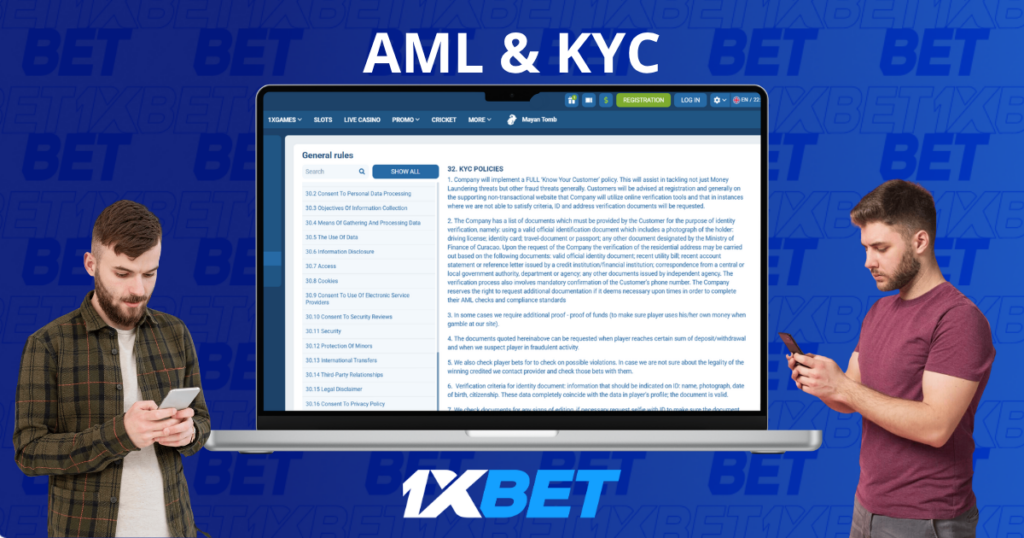
Customer Identity Verification Process
Identity checking links a registered profile to a real person before restricted financial activity is approved. The procedure can begin during registration, after a deposit request or before a withdrawal. A valid government-issued document normally supplies the legal name, date of birth, photograph and document number. Address evidence or a payment record may be requested when the initial file does not resolve ownership.
| Verification item | Main control | Typical reason for a new request |
| Identity document | Confirms name, age and photograph | Image is cropped, expired or unreadable |
| Address evidence | Connects the account with a residential address | Details differ from the registered profile |
| Payment proof | Confirms control of the funding method | Payer name does not match account data |
| Source-of-funds evidence | Explains how the money was obtained | Activity is unusually large or inconsistent |
Files should show all required corners and legible data without digital alteration. The Online Casino may pause a payment while discrepancies are reviewed. Processing time cannot be fixed across all cases because document quality and review complexity differ. Support operates 24/7 when the verification interface requests clarification.
Risk Assessment Protocols
Account risk assessment determines how much scrutiny a profile or operation receives. The 1xBet Betting Company can apply a risk-based model rather than treating every payment as equally suspicious. A routine transaction with consistent details may require fewer checks, while conflicting identity data or abrupt changes in behaviour can trigger enhanced review.
- Registration risk covers age, identity consistency and duplicated account indicators.
- Payment risk compares the account holder with the payer and examines the selected method.
- Behavioural risk considers sudden changes in deposit size, frequency or withdrawal pattern.
- Geographic risk considers restricted territories and the location connected with access or payment.
- Product risk reflects whether activity appears economically reasonable for ordinary betting or casino play.
Risk scores are reassessed when new information appears. A single flag does not automatically prove misconduct; it prompts the platform to collect evidence and establish context. Possible outcomes include document renewal, payment-method confirmation or an explanation of fund origin. Exact internal thresholds are not published because disclosure could help users evade controls. Current account notices provide the relevant request and submission route.
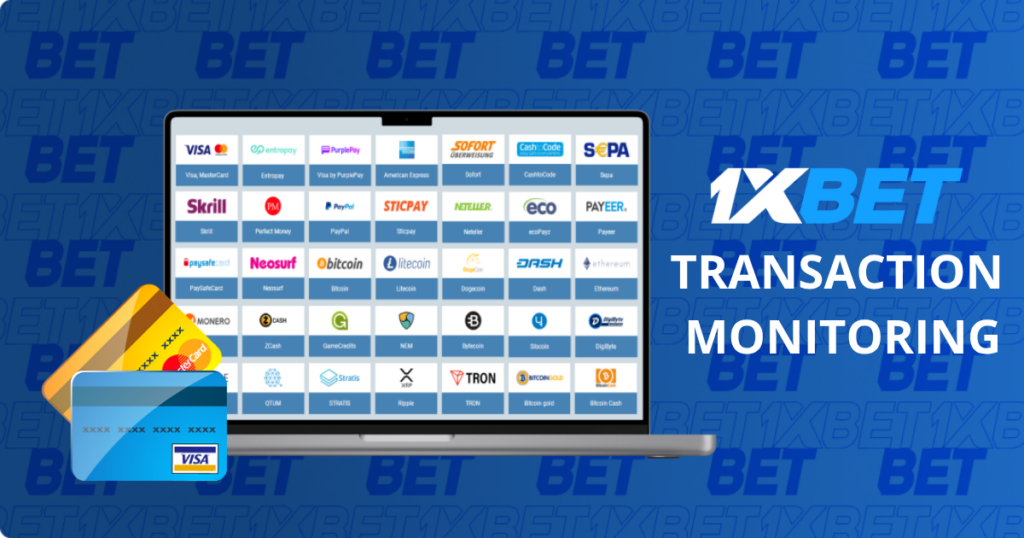
1xBet Transaction Monitoring
Automated and manual monitoring examines the movement of money through an account. The control is intended to identify patterns that do not fit normal betting use, including rapid deposits followed by withdrawal attempts with little gameplay. It can also detect repeated transactions structured into smaller amounts or transfers involving a payment instrument held by another person.
| Pattern reviewed | Compliance concern | Possible response |
| Fast deposit-to-withdrawal cycle | Account used mainly to move funds | Hold and activity review |
| Several similar small payments | Possible threshold avoidance | Combined transaction analysis |
| New third-party payment details | Unclear ownership of funds | Payer verification |
| Sharp change in value or frequency | Activity inconsistent with account history | Enhanced due diligence |
Winnings are generally returned through the method used for the deposit when that channel supports payouts. This rule creates a clearer audit trail and reduces diversion to an unrelated recipient. A different route may be required if the original provider cannot process withdrawals. The cashier displays the available options and current limits. A flagged operation can remain pending until the requested evidence is checked; monitoring does not create a guaranteed universal review time.
Customer Due Diligence Standards
Due diligence establishes who controls an account, why funds are moving and whether the activity matches the available information. Standard checks cover identity, age and payment ownership. Enhanced due diligence applies when the assessed risk is higher or ordinary documents leave a material question unresolved.
- Personal data must match across the profile and submitted identity evidence.
- The payment instrument should belong to the registered account holder unless the rules expressly permit another arrangement.
- Address records may be checked when residency or account jurisdiction affects access.
- Source-of-funds material may include a bank statement, payslip or documented sale.
- Records may be refreshed when a document expires or account information changes.
Evidence requirements remain proportional to the case. A low-risk profile does not necessarily receive every request, while a complex withdrawal may require more than one document. Data should be submitted only through the protected upload route shown in the account or another official support channel. The platform can restrict selected financial functions while a review remains incomplete. Completing a check confirms the supplied facts at that moment; it does not prevent later monitoring when transaction behaviour changes.
Global Sanctions Screening
Sanctions screening compares identifying data with official restriction records relevant to the service relationship. The control helps prevent an account or payment from involving a prohibited person, entity or territory. Matching can examine the name, date of birth, nationality and other available identifiers rather than relying on one field alone.
- Initial screening can occur when an account is created or verified.
- Ongoing screening can detect a person added to a sanctions list after registration.
- Payment screening can assess the parties and providers connected with a transaction.
- A potential match can trigger manual review before access or payment continues.
- A confirmed restriction can lead to blocking, reporting or another action required by applicable rules.
Similar names can create false positives, so a preliminary alert is not automatically a confirmed match. Review staff may request another identifier to distinguish the account holder from the listed subject. Screening scope depends on the legal entity and rules applicable to the account. The relevant terms and legal footer show the current operator and licensing information. No licence removes the need for AML controls; licensing, identity verification, payment monitoring and sanctions checks operate as separate compliance layers.